

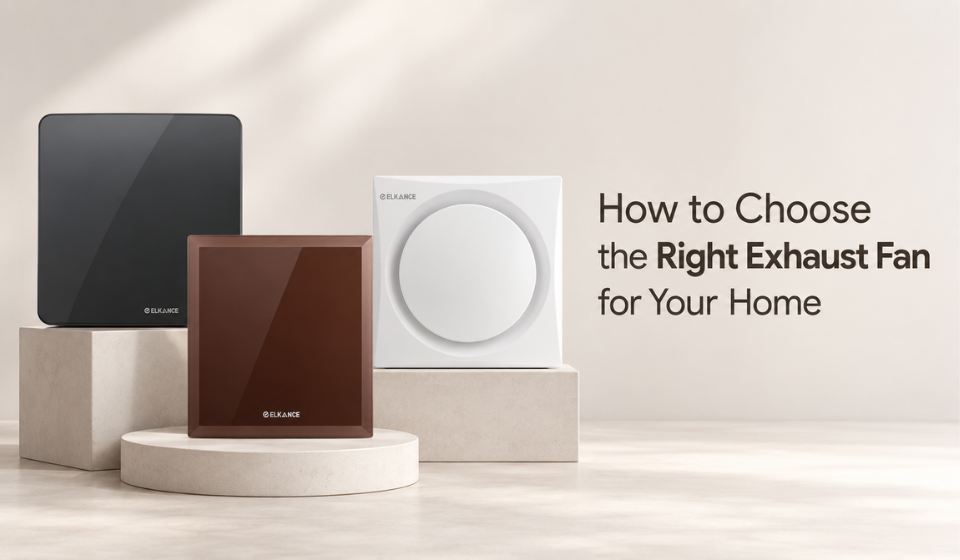
A Complete Buying Guide for Better Ventilation
An exhaust fan is one of the most important appliances in any home, yet many people choose one based only on price or appearance. The right exhaust fan can improve air quality, reduce moisture, remove odors, and create a healthier living environment.
This guide will help you choose the perfect exhaust fan for your space.
Why Is Ventilation Important?
Proper ventilation helps remove:
- Excess humidity
- Smoke and cooking fumes
- Unpleasant odors
- Dust and airborne particles
- Heat buildup
Without adequate ventilation, indoor spaces can become uncomfortable and may even lead to issues such as mold growth and poor air quality.
Step 1: Identify the Installation Area
Different spaces require different types of exhaust fans.
Bathroom Exhaust Fans
Bathroom exhaust fans help remove moisture generated during showers and daily use.
Benefits:
- Prevents mold and mildew
- Reduces humidity
- Eliminates odors
- Protects walls and ceilings
Kitchen Exhaust Fans
Kitchens generate smoke, grease, and heat during cooking.
A kitchen exhaust fan helps:
- Remove cooking fumes
- Improve air circulation
- Reduce heat buildup
- Keep the kitchen fresh
Commercial & Office Spaces
Commercial spaces often require continuous ventilation.
Ideal for:
- Offices
- Shops
- Warehouses
- Workshops
- Factories
Step 2: Consider Airflow Capacity
Airflow determines how effectively the fan can remove stale air.
A larger room requires:
- Higher air displacement
- More powerful motor performance
- Larger fan size
Choosing a fan that is too small may result in poor ventilation and reduced efficiency.
Step 3: Check Noise Levels
No one wants a fan that sounds like a machine running all day.
Look for:
- Low-noise operation
- Balanced motor performance
- Smooth airflow design
A quieter exhaust fan provides greater comfort, especially in bathrooms, bedrooms, and offices.
Step 4: Focus on Energy Efficiency
An exhaust fan may run for several hours every day.
Choosing an energy-efficient model offers:
- Lower electricity bills
- Reduced power consumption
- Better long-term savings
Efficient motors deliver strong airflow without unnecessary energy usage.
Step 5: Evaluate Build Quality
A quality exhaust fan should withstand daily operation and varying environmental conditions.
Look for:
- Durable body construction
- High-quality motor
- Rust-resistant materials
- Long service life
Investing in quality often reduces maintenance and replacement costs.
Common Mistakes to Avoid
Buying Based Only on Price
A cheaper fan may lead to:
- Higher noise levels
- Lower airflow performance
- Shorter lifespan
Always prioritize performance and durability.
Ignoring Room Size
A fan that is too small will struggle to ventilate larger areas effectively.
Choose a model suitable for the intended space.
Overlooking Energy Consumption
A slightly more efficient fan can save significant electricity costs over time.
Why Homeowners Trust Elkance
At Elkance, we design ventilation solutions that combine performance, efficiency, and durability.
Our exhaust fans are engineered to provide:
✔ Powerful Airflow
✔ Low Noise Operation
✔ Energy Efficiency
✔ Long-Term Reliability
✔ Modern Design
✔ Consistent Performance
Whether for homes, offices, or commercial spaces, Elkance products are built to keep your environment fresh and comfortable.
Final Thoughts
The right exhaust fan does more than move air—it improves comfort, protects interiors, and promotes a healthier environment.
Before making a purchase, consider airflow, room size, noise level, efficiency, and durability. A well-chosen exhaust fan can deliver years of reliable performance and better indoor air quality.hether you’re upgrading your home or planning a new commercial space, choosing the right ventilation solution can make all the difference.